Future Ready Starts in 8th Grade Preparing Students for High School College Career or Military Paths
- 16 hours ago
- 9 min read
Eighth grade is more than the final year of middle school. It is the launch point for the next four years of choices, habits, credits, activities, and experiences that shape what students can do after graduation.
By the time students enter ninth grade, the clock starts quickly. Courses begin to count toward graduation. Career and technical education pathways may require a sequence. Advanced coursework often depends on early prerequisites. Military options may involve fitness, citizenship, aptitude preparation, and conversations with trusted adults. College plans depend on academic readiness, attendance, study skills, and a realistic understanding of cost and admission requirements.
That is why future readiness cannot begin in eleventh grade. It must begin before high school, with a clear plan, caring adults, and tools that help students understand who they are becoming.

Eighth grade is the right time to build a future-ready plan
Students do not need to have their whole lives figured out at 13 or 14. They do need a starting point.
A strong eighth-grade planning process helps students answer a few practical questions:
What subjects do I enjoy?
What activities make me feel capable and curious?
What careers might connect to my interests?
What high school courses help me explore those options?
What habits do I need to build now?
What support do I need from school and home?
This is where CCMR, college ready, career ready, military ready, planning, interests inventory, ASVAB conversations become more than compliance language. They become student conversations. A student who likes solving mechanical problems may explore engineering, automotive technology, welding, aviation maintenance, or military technical roles. A student who enjoys helping others may explore health science, education, counseling, public safety, or service-based careers.
The goal is not to lock students into one path. The goal is to help them make better first choices.
When students enter ninth grade with a plan, they are more likely to understand why school matters. Algebra is no longer just a required class. It becomes part of a construction management pathway, a health science program, a computer science sequence, or college preparation. English is no longer just essays and books. It becomes communication, leadership, scholarship applications, and workplace readiness.
A future-ready plan gives purpose to the schedule.
Superintendents set the expectation for readiness
Future readiness begins with district leadership. Superintendents have the responsibility to make sure the transition from middle school to high school is not left to chance.
That means setting a clear expectation that every eighth-grade student should receive meaningful guidance before choosing ninth-grade courses. This expectation should be visible in board goals, district planning, campus improvement work, and family communication.
Superintendents can support this work by asking direct questions:
Do all eighth graders complete an interest inventory?
Do students understand high school endorsements, pathways, or program options?
Are families receiving information early enough to make informed decisions?
Are counselors given time and support to meet with students?
Are middle school and high school teams planning together?
Are students learning about college, career, and military options in balanced ways?
Superintendents also shape culture. If district leaders treat readiness as a graduation issue only, schools may wait too long. If leaders treat readiness as a middle school and high school partnership, students benefit earlier.
A strong district message sounds like this: every student deserves a plan, every plan deserves adult support, and every pathway deserves respect.
That includes students planning for a four-year college, a two-year college, an industry credential, an apprenticeship, military service, direct employment, or a combination of options over time.
Central office leaders turn the vision into a system
Central office administrators make future readiness practical. They build the systems that help campuses deliver consistent support to every student.
Curriculum leaders, counseling directors, CTE directors, assessment coordinators, special programs staff, and technology teams all play a part. Their work connects the district vision to the student experience.
A strong central office system includes several pieces.
Course planning that starts before ninth grade
Eighth-grade students need clear explanations of high school graduation plans, required credits, elective choices, and pathway sequences. Families need this information before course selection, not after schedules are built.
This is especially important for CTE Programs of Study. Some pathways work best when students begin introductory courses in ninth grade. If students miss the first step, they may have fewer options later.
Career exploration that includes many futures
Students should hear about Military, College, University, Higher Education, Career, Career Pathway, and CTE Programs of Study options in a balanced way. No pathway should be treated as second best. A healthy system helps students compare options based on interests, strengths, values, training requirements, cost, service goals, and long-term opportunity.
Data that helps adults guide students
Central office teams can review course requests, pathway enrollment, interest inventory results, attendance patterns, and academic readiness data. The point is not to reduce students to numbers. The point is to notice who needs support.
For example, if many students express interest in health science but few enroll in the first pathway course, the district may need better communication. If students show high interest in military service but have little understanding of the ASVAB, fitness expectations, or enlistment timelines, the district can provide better guidance.
Training for counselors and teachers
A future-ready system depends on adults who know the options. Middle school counselors need current information about high school pathways. High school counselors need time to collaborate with middle school teams. Teachers need language to connect classroom learning to careers without turning every lesson into a career lecture.
Central office administrators can protect time for this work and provide common tools so every campus is not inventing its own process.
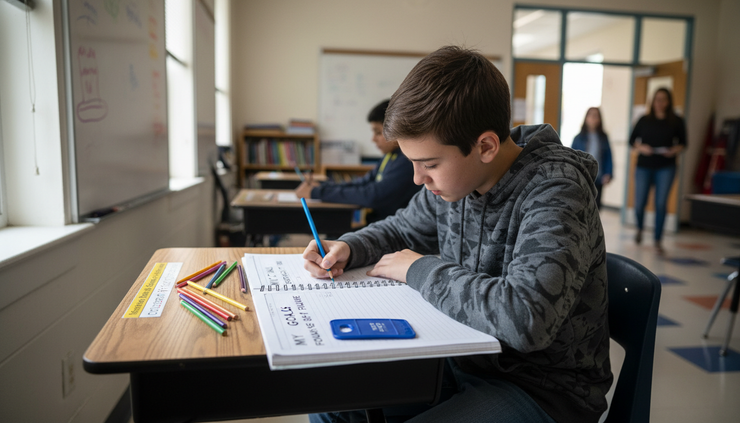
Principals make future readiness real on campus
Principals carry the vision into daily school life. They decide whether future planning becomes a one-time event or a real part of the campus culture.
A principal can make eighth-grade readiness stronger by building a campus calendar that includes:
Interest inventories
High school course information sessions
Counselor visits
Family nights
Student goal-setting activities
High school campus visits
Career exploration lessons
CTE pathway showcases
Military and college awareness opportunities
The best planning experiences are not rushed. Students need time to think, ask questions, change their minds, and talk with adults. Families need time to understand course options and how choices in ninth grade connect to graduation.
Principals can also create a common message across the campus. Teachers, counselors, coaches, and support staff should all know that eighth grade is a transition year. Every adult can help students see their strengths.
A science teacher might point out a student’s careful lab work. A coach might notice leadership and discipline. A fine arts teacher might see creativity, persistence, or performance confidence. A math teacher might recognize problem-solving skills. These observations matter because many eighth graders do not yet see their own talents clearly.
Principals also protect equity. Future-ready planning must reach students who are quiet, new to the district, learning English, receiving special education services, experiencing housing instability, or unsure how to speak up. A strong campus does not wait for students to ask the perfect question. It brings guidance to them.
Parents and guardians help students turn options into decisions
Parents do not need to know every detail of high school scheduling to help their children prepare. They do need to stay engaged, ask good questions, and help students think beyond the next report card.
A useful family conversation can begin with simple prompts:
What classes make you feel successful?
What do you like doing even when it is hard?
What kind of work can you imagine doing one day?
Do you prefer working with people, ideas, tools, technology, nature, or information?
What do you want to learn more about in high school?
What worries you about high school?
These questions help students reflect. They also help parents hear what their children value.
Parents can support future readiness in practical ways.
Attend course selection meetings
Course selection can shape a student’s next four years. Parents should attend information nights, read planning materials, and ask about prerequisites, advanced options, CTE sequences, fine arts, athletics, world languages, and support classes.
Review the student’s plan together
A student plan should not sit untouched in a portal. Families can review it at home and talk about whether it still fits. Plans can change, but changes should be thoughtful.
Encourage exploration without pressure
Students need encouragement, not panic. A child who wants to be a veterinarian today may become interested in biomedical science later. A student who likes video games may discover coding, graphic design, cybersecurity, digital animation, or electronics. Exploration is productive when adults help students connect interests to real skills.
Build habits that support every pathway
Attendance, time management, reading stamina, communication, self-advocacy, and follow-through matter for college, career, and military readiness. Parents can help by setting routines, checking grades, encouraging sleep, limiting distractions during study time, and celebrating effort.
Talk about money, service, and training honestly
Families can begin age-appropriate conversations about college costs, scholarships, community college, trade programs, apprenticeships, military service, transportation, and local job opportunities. Students should understand that most futures require preparation, and there are many respectable ways to prepare.

Xello helps students connect interests to a plan
Digital planning tools can make future readiness easier to manage and more meaningful for students. Xello is designed to help students explore who they are, learn about career options, and build plans that connect school choices to future goals.
For eighth graders, Xello can support the transition to high school in several useful ways.
Students can complete interest inventories
Interest inventories help students name patterns they may not notice on their own. A student may discover that they enjoy hands-on problem solving, creative work, caregiving, organizing information, leading groups, or working outdoors.
These results are not labels. They are conversation starters. They help counselors, teachers, and parents ask better questions.
Students can explore careers with more context
Career exploration works best when students can see what a job involves, what education or training may be needed, and what skills matter. Xello helps students compare careers and reflect on whether an option fits their interests and goals.
This can be especially helpful for students who only know the careers they see in their family, neighborhood, or media. A broader view opens doors.
Students can connect courses to future goals
Planning tools help students see the link between high school choices and future options. If a student is interested in health science, they can look at related courses. If a student is interested in engineering, they can consider math, science, and CTE options. If a student is interested in military service, they can plan for academic readiness, physical readiness, leadership experiences, and ASVAB awareness.
Adults can support students with better information
Xello can help counselors and administrators see student interests across a grade level or campus. That information can guide family nights, pathway presentations, course offerings, and student advising.
For example, if many eighth graders show interest in business, public safety, or technology, a district can make sure those students receive clear information about available high school courses and related postsecondary options.
The tool does not replace relationships. It supports them. The best results happen when students use Xello and then talk with counselors, teachers, and families about what they learned.
A future-ready transition has a clear timeline
A strong eighth-grade readiness process can follow a simple yearly rhythm. Districts can adjust the timing, but the sequence matters.
Time of year | Student experience | Adult responsibility |
Fall | Complete interest inventories and begin career exploration | Counselors and teachers introduce planning tools and vocabulary |
Winter | Learn about high school programs, pathways, and graduation requirements | Principals and central office teams provide clear course information |
Early spring | Select ninth-grade courses with family input | Counselors meet with students and support informed choices |
Late spring | Review plans and prepare for the high school transition | Middle and high school teams share information and support needs |
Summer | Reinforce routines, reading, math skills, and confidence | Families help students prepare for a strong start |
This kind of timeline helps schools avoid the last-minute scramble. It also gives families repeated chances to engage.
Future readiness should feel like a guided process, not a single deadline.

Future prepared means every student has a next step
A future-ready eighth grader does not need a perfect ten-year plan. They need a supported next step.
That next step might be choosing the right ninth-grade math course. It might be applying for a CTE pathway. It might be learning what GPA means. It might be exploring the ASVAB. It might be visiting a high school campus, asking for help, or talking with a parent about long-term goals for the first time.
Superintendents set the expectation. Central office administrators build the system. Principals make the work real on campus. Parents and guardians keep the conversation alive at home. Tools like Xello help students connect interests, strengths, courses, and future options in a way they can understand.
When schools begin this work in eighth grade, students enter high school with more than a schedule. They enter with direction, language, confidence, and a plan they can keep shaping.
After approval, this article can be connected to the WCFIX website and shared through LinkedIn to support district leaders, campus teams, and families working to prepare students for college, career, or military pathways.

Comments